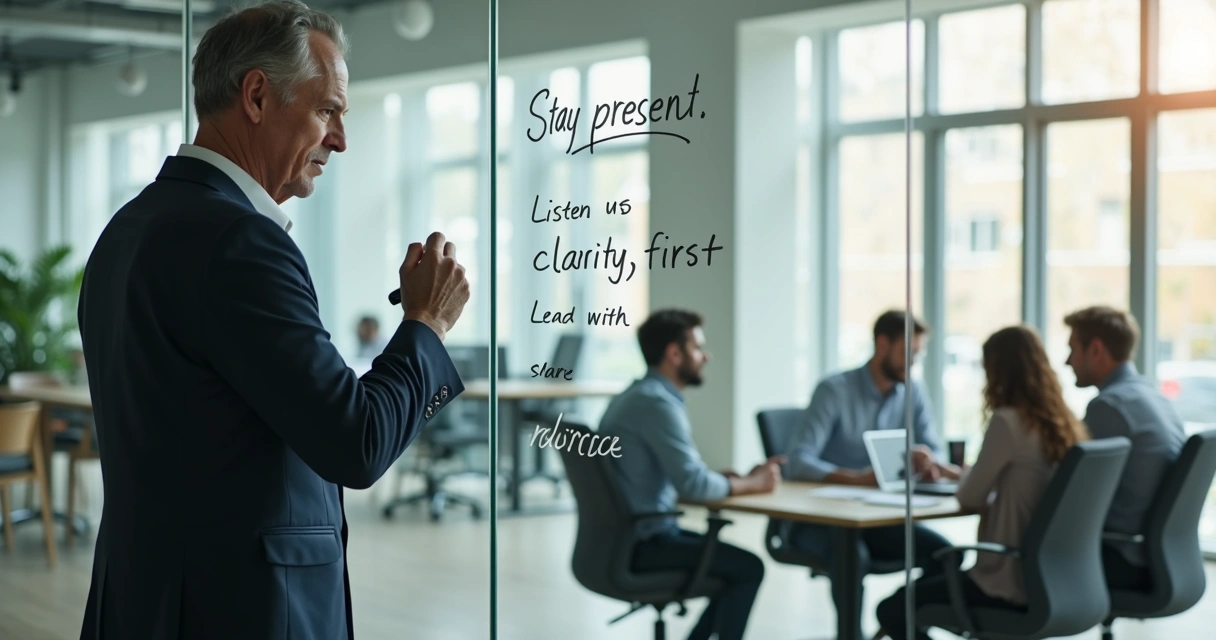


Teams learn from what is said, but they learn even more from what is repeated in plain sight. A calm reply during stress. A clear boundary without hostility. A leader who admits error without collapsing into shame. These moments do not stay personal. They spread.
We call this silent transmission. It is the way one person’s level of emotional and behavioral maturity becomes a signal for the whole group. No speech is needed. People watch, adjust, test, and then copy what seems safe, respected, and rewarded.
Team norms are often shaped less by formal policy and more by the behavior people see tolerated and repeated.
In our experience, many teams do not fail because they lack skill. They struggle because they inherit small habits of defensiveness, avoidance, and emotional haste. The reverse is also true. When one mature pattern becomes steady, the social field changes. Slowly at first. Then all at once.
How silent transmission works
Every team has an unwritten code. We notice it in tone, timing, and reaction. Can people disagree without fear? Can they say, “I need help”? Can they pause before turning tension into blame?
These answers are rarely taught in a handbook. They are learned through contact. A new team member enters the room and starts reading it within days. We have seen this many times. People scan for cues:
- How seniors handle pressure
- What happens after mistakes
- Whether feedback is clean or personal
- How conflict is faced or avoided
That scan becomes adaptation. Adaptation becomes culture.
Maturity is contagious.
This is one reason team behavior can change without a formal change plan. One person with grounded presence can interrupt old reactions. If that person has social credibility, the effect grows faster. If that person is in leadership, the effect reaches deeper.
What maturity looks like in daily work
Maturity at work is not stiffness, silence, or forced calm. It does not mean never feeling upset. We think true maturity is visible in regulation, honesty, and proportion. A mature person still feels pressure, but they do not dump it on the group without awareness.
Modeling maturity means showing people how to stay clear, accountable, and respectful under real conditions.
In practice, that can look simple:
- Speaking with firmness without attacking character
- Owning a mistake without long self-defense
- Listening fully before replying
- Setting limits without contempt
- Giving credit without needing control
- Staying steady when others are reactive
These acts may seem small. They are not small to a team nervous system. They tell people what kind of behavior belongs here.
We once watched a manager enter a tense meeting after a missed deadline. Everyone expected blame. Instead, the manager said, “Let us separate facts, impact, and next step.” The room changed in seconds. Shoulders dropped. People spoke more honestly. No grand speech. Just one mature move at the right time.

Why one person can shift a group
Groups copy what protects belonging. If sarcasm protects status, sarcasm spreads. If blame reduces risk, blame spreads. If calm accountability earns trust, that spreads too.
This is not abstract. Research on team cohesion and performance influencing each other over time shows a reciprocal pattern in which team quality and results move together, with shared leadership and member competence playing strong roles. We read this as a social truth many leaders feel every day. Behavior and team outcomes feed each other.
So when a mature person changes the way tension is handled, they are not only improving one exchange. They are shaping the conditions that make stronger team functioning more likely.
Still, silent transmission has one hard rule. It works through consistency. A single good day does not reset a team. Repetition does.
What blocks mature modeling
Many people want to model maturity, yet drift under strain. We understand that. Pressure exposes habits we thought we had outgrown. Usually, four blocks appear first.
- Emotional leakage, when stress spills into tone and timing
- Image protection, when looking right matters more than being clear
- Conflict fear, when people soften truth until it becomes confusion
- Status anxiety, when hierarchy makes honest exchange feel unsafe
When these patterns stay unspoken, teams start performing safety instead of building it. Meetings look polite, but trust goes thin. People agree in public and resist in private.
Immature norms survive when nobody interrupts them with a steadier example.
This is why role modeling matters so much during stress. Pressure reveals the real training standard of a team. Not the values on paper. The values in motion.
How we can model maturity with intention
Silent transmission becomes stronger when we act with awareness. We do not need perfection. We need repeatable signals that others can read.
A simple sequence helps:
- Pause before response
- Name reality without exaggeration
- Take your share of responsibility
- Ask for the next useful step
That sequence sounds plain, but it changes the emotional climate of a room. It lowers noise. It keeps dignity in place. It gives people a path back to shared work.
We also think mature modeling grows through a few direct practices:
- Use specific language instead of loaded language
- Correct in private when possible, affirm in public when true
- Make repair quickly after a poor reaction
- Reward honesty, not only confidence
- Show that boundaries and care can exist together
People notice these details. More than we think.

How norms change over time
Norms rarely change in one dramatic moment. More often, they shift in three stages.
First, people observe a new pattern. They are careful. They wait to see if it lasts.
Second, a few people test it. They speak a little more openly. They admit uncertainty. They set a boundary with less fear.
Third, the group starts defending the new norm together. At that point, culture is no longer carried by one person alone.
What we repeat, we teach.
That is why mature modeling has social force. It does not stay at the level of personal style. It becomes permission. Then expectation. Then standard.
Conclusion
Silent transmission is one of the strongest forces inside a team because people trust lived behavior more than stated values. When we model maturity through calm, accountability, and respect, we give others a pattern they can safely follow. Over time, that pattern becomes a norm.
We think the real shift happens when maturity stops being a private trait and starts becoming a shared reference. One grounded response can reduce fear. Many grounded responses can reshape a culture. That is how healthier teams are built, not only through instruction, but through presence that teaches without announcing itself.
Frequently asked questions
What is modeling maturity in teams?
Modeling maturity in teams means showing steady, respectful, and accountable behavior so others can learn the standard through daily contact.
It includes how we handle stress, disagreement, mistakes, and boundaries. People watch these moments closely, especially when pressure is high.
How does silent transmission affect team norms?
Silent transmission affects team norms by turning repeated behavior into shared expectation. If calm honesty is practiced often, people begin to see it as normal. If blame and avoidance are repeated, those become normal instead.
Teams absorb patterns through observation, not only through formal guidance.
How can I model maturity at work?
We can model maturity at work by pausing before reacting, speaking clearly without attack, admitting mistakes, and making repair when needed. It also helps to listen well and keep boundaries clean.
Consistency matters more than performance. Small steady actions teach more than occasional strong speeches.
Why is team modeling important?
Team modeling is important because behavior spreads faster than instruction inside groups.
When people see mature conduct rewarded and repeated, trust grows and conflict becomes easier to handle. This gives the team a healthier social base for decisions and cooperation.
Does modeling maturity improve team performance?
Yes, modeling maturity can improve team performance because it supports trust, clearer communication, and better coordination. These conditions help people work together with less hidden friction.
Research on team cohesion and performance also points to a two-way link between team functioning and results, which supports the idea that stronger norms can help teams perform better over time.